
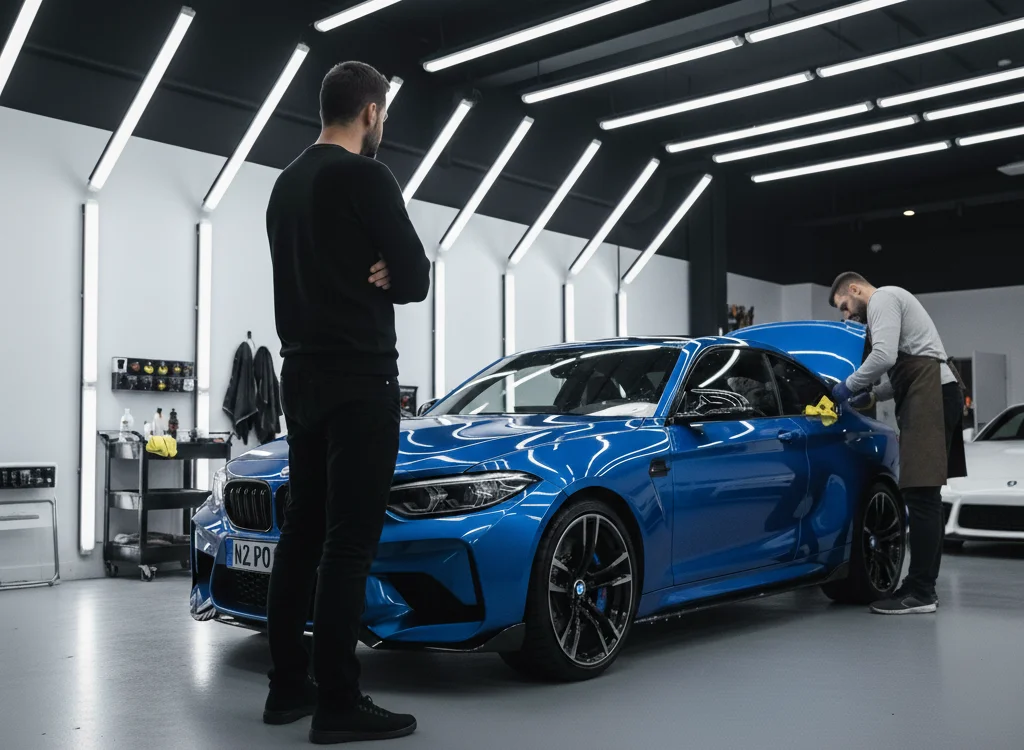
Car PPF installation

PPF Explained: A Complete Guide to Paint Protection Film | Prism Film

·

·

Car PPF installation

What Exactly Is PPF – and Why Does It Matter?

Paint Protection Film, often called PPF, is a transparent polyurethane layer, also called TPU, applied to a vehicle’s surface to protect it from scratches, rock chips, stains, and UV damage. Modern films go beyond simple protection – they feature self-healing technology, hydrophobic coatings, and high-gloss finishes that preserve the car’s shine for years.

For car owners, it’s not just a luxury anymore. It’s an investment – one that protects both the beauty and resale value of the vehicle. In this post, we’ll break down the essentials of PPF -what it is, why it matters, and the critical things to know before investing in one.

In recent years, the paint protection film (PPF) industry has shifted from being a luxury niche to a mainstream automotive essential. What was once reserved for high-end supercars is now becoming a must-have for everyday drivers who want their vehicles to look newer for longer.

Today’s PPF customers fall mainly into two groups:

  1. Everyday car owners – people who use their cars daily and simply want to protect them from scratches, chips, and harsh weather.
  2. Car enthusiasts and detailing lovers – those who treat their vehicles like art pieces and seek the perfect finish, gloss, and self-healing magic that advanced PPFs can provide.

When you look closely at customer behavior, the reasons people go for PPF are surprisingly personal:

  • Protection from daily wear: urban drivers who park in tight spaces or drive long routes want chip and scratch resistance.
  • Aesthetic perfection: owners of BMW, Tesla, Porsche, Lexus, and even Toyota and Honda want that showroom gloss to last.
  • Ease of maintenance: hydrophobic and self-healing films reduce washing time and preserve gloss.
  • Confidence in product quality: people expect the film to last years, not months.

That’s why the modern PPF market isn’t just growing – it’s maturing. Car owners today don’t just want any protection film.
They want the right one that lasts years, looks invisible, and truly performs.

PPF has become a symbol of responsibility, not just luxury. It’s about protecting what you’ve worked hard for your car.

The Truth About “Popular” Brands

Every market has a few big names that everyone seems to trust. If you browse the internet or even take a quick walk through any PPF installation shop, you’ll start hearing a few familiar names – the brands that everyone seems to talk about. But here’s something most blogs never say – popularity doesn’t always mean perfection.

Many car owners assume that a well-known name guarantees the best quality, but experienced installers will tell you: some of the most talked-about brands are also the most complained about.

Common pain points include:

  • Yellowing over time
  • Edges lifting or peeling
  • Uneven gloss
  • Weak warranty support

This happens because PPF performance depends on a lot more than marketing claims – it depends on film formulation, manufacturing consistency, and after-sales support.
That’s why it’s crucial to look beyond the logo and focus on tested durability, optical clarity, and customer feedback.

PPF Installation: The Step Most People Overlook

Even the highest-quality paint protection film can fail miserably if it’s not installed properly. Most car owners underestimate this step – yet it’s the point where everything can go wrong.

When PPF is applied incorrectly, the damage isn’t just visual – it can affect the paint itself, shorten the film’s life, and even make future maintenance a nightmare.

What Happens When PPF Is Poorly Installed?

A rushed or careless installation can cause:

  • Visible bubbles and trapped debris that distort reflections.
  • Edges lifting or peeling, letting in dust and moisture.
  • Uneven gaps along body lines, leading to visible outlines after removal.
  • Paint discoloration and mismatch occurs where exposed edges oxidize and get scratches differently from protected areas.

When these flaws appear, many owners think it’s the product’s fault- but in most cases, the problem lies in the installation process, not the film.

PPF Removal: A Tough Lesson in Time

Improper installation also makes removal a major challenge. A freshly applied film just 10 minutes old is also not an easier job to peeled off by hand. So think about few years after, the adhesive bonds deeply with the paint surface, making removal extremely difficult and time-consuming. In many cases, it leaves behind sticky residue or, worse, pulls up clear coat or paint layers.

Some vehicles pose additional challenges during installation. For example, the BMW G82 M2 is well-known among installers for its sharply contoured front bumper, which makes it difficult to achieve perfect film alignment and edge wrapping. Many installation complaints come from such tricky spots where curves and tight angles require extra precision and patience.

In short, the installer’s skill is as important as the product itself. You wouldn’t buy a premium camera and let an amateur use it for your wedding – the same logic applies to PPF.

Choosing Quality: What Smart Car Owners Do Differently

When it comes to PPF, many car owners assume that the most expensive brand automatically means the best protection, but that’s not always true. Smart car owners know how to look beyond the price tag.

Top-tier brands often spend heavily on marketing, and that cost gets passed down to the customer. Meanwhile, there are underrated brands in the market that offer the same (or even better) durability, clarity, and hydrophobic performance without the inflated price. The key is knowing how to spot real value.

A well-engineered film from a reputable manufacturer that offers strong warranty coverage, responsive after-sales support, and certified installers who know what they’re doing.

A truly premium and worthy PPF brand should offer:

  • Fair, transparent pricing that reflects quality, not marketing hype.
  • High-grade film quality with excellent clarity, self-healing, and long-term durability.
  • Reliable warranty and afterservice, ensuring support long after installation.
  • Strong dealer and installer network with trained professionals who know their craft.
  • Consistent installation standards, ensuring a flawless finish across all vehicle types.

This approach doesn’t just save money – it saves time, effort, and most importantly, “YOUR CAR”. Choosing a reliable, performance-focused PPF brand with good dealer support is the kind of move that separates smart car owners from the rest.


Leave a Reply

Your email address will not be published. Required fields are marked *

One response to “PPF Explained: A Complete Guide to Paint Protection Film | Prism Film”
  1. I enjoy your writing style really loving this internet site.

Car PPF installation

What Exactly Is PPF – and Why Does It Matter?

Paint Protection Film, often called PPF, is a transparent polyurethane layer, also called TPU, applied to a vehicle’s surface to protect it from scratches, rock chips, stains, and UV damage. Modern films go beyond simple protection – they feature self-healing technology, hydrophobic coatings, and high-gloss finishes that preserve the car’s shine for years.

For car owners, it’s not just a luxury anymore. It’s an investment – one that protects both the beauty and resale value of the vehicle. In this post, we’ll break down the essentials of PPF -what it is, why it matters, and the critical things to know before investing in one.

In recent years, the paint protection film (PPF) industry has shifted from being a luxury niche to a mainstream automotive essential. What was once reserved for high-end supercars is now becoming a must-have for everyday drivers who want their vehicles to look newer for longer.

Today’s PPF customers fall mainly into two groups:

  1. Everyday car owners – people who use their cars daily and simply want to protect them from scratches, chips, and harsh weather.
  2. Car enthusiasts and detailing lovers – those who treat their vehicles like art pieces and seek the perfect finish, gloss, and self-healing magic that advanced PPFs can provide.

When you look closely at customer behavior, the reasons people go for PPF are surprisingly personal:

  • Protection from daily wear: urban drivers who park in tight spaces or drive long routes want chip and scratch resistance.
  • Aesthetic perfection: owners of BMW, Tesla, Porsche, Lexus, and even Toyota and Honda want that showroom gloss to last.
  • Ease of maintenance: hydrophobic and self-healing films reduce washing time and preserve gloss.
  • Confidence in product quality: people expect the film to last years, not months.

That’s why the modern PPF market isn’t just growing – it’s maturing. Car owners today don’t just want any protection film.
They want the right one that lasts years, looks invisible, and truly performs.

PPF has become a symbol of responsibility, not just luxury. It’s about protecting what you’ve worked hard for your car.

The Truth About “Popular” Brands

Every market has a few big names that everyone seems to trust. If you browse the internet or even take a quick walk through any PPF installation shop, you’ll start hearing a few familiar names – the brands that everyone seems to talk about. But here’s something most blogs never say – popularity doesn’t always mean perfection.

Many car owners assume that a well-known name guarantees the best quality, but experienced installers will tell you: some of the most talked-about brands are also the most complained about.

Common pain points include:

  • Yellowing over time
  • Edges lifting or peeling
  • Uneven gloss
  • Weak warranty support

This happens because PPF performance depends on a lot more than marketing claims – it depends on film formulation, manufacturing consistency, and after-sales support.
That’s why it’s crucial to look beyond the logo and focus on tested durability, optical clarity, and customer feedback.

PPF Installation: The Step Most People Overlook

Even the highest-quality paint protection film can fail miserably if it’s not installed properly. Most car owners underestimate this step – yet it’s the point where everything can go wrong.

When PPF is applied incorrectly, the damage isn’t just visual – it can affect the paint itself, shorten the film’s life, and even make future maintenance a nightmare.

What Happens When PPF Is Poorly Installed?

A rushed or careless installation can cause:

  • Visible bubbles and trapped debris that distort reflections.
  • Edges lifting or peeling, letting in dust and moisture.
  • Uneven gaps along body lines, leading to visible outlines after removal.
  • Paint discoloration and mismatch occurs where exposed edges oxidize and get scratches differently from protected areas.

When these flaws appear, many owners think it’s the product’s fault- but in most cases, the problem lies in the installation process, not the film.

PPF Removal: A Tough Lesson in Time

Improper installation also makes removal a major challenge. A freshly applied film just 10 minutes old is also not an easier job to peeled off by hand. So think about few years after, the adhesive bonds deeply with the paint surface, making removal extremely difficult and time-consuming. In many cases, it leaves behind sticky residue or, worse, pulls up clear coat or paint layers.

Some vehicles pose additional challenges during installation. For example, the BMW G82 M2 is well-known among installers for its sharply contoured front bumper, which makes it difficult to achieve perfect film alignment and edge wrapping. Many installation complaints come from such tricky spots where curves and tight angles require extra precision and patience.

In short, the installer’s skill is as important as the product itself. You wouldn’t buy a premium camera and let an amateur use it for your wedding – the same logic applies to PPF.

Choosing Quality: What Smart Car Owners Do Differently

When it comes to PPF, many car owners assume that the most expensive brand automatically means the best protection, but that’s not always true. Smart car owners know how to look beyond the price tag.

Top-tier brands often spend heavily on marketing, and that cost gets passed down to the customer. Meanwhile, there are underrated brands in the market that offer the same (or even better) durability, clarity, and hydrophobic performance without the inflated price. The key is knowing how to spot real value.

A well-engineered film from a reputable manufacturer that offers strong warranty coverage, responsive after-sales support, and certified installers who know what they’re doing.

A truly premium and worthy PPF brand should offer:

  • Fair, transparent pricing that reflects quality, not marketing hype.
  • High-grade film quality with excellent clarity, self-healing, and long-term durability.
  • Reliable warranty and afterservice, ensuring support long after installation.
  • Strong dealer and installer network with trained professionals who know their craft.
  • Consistent installation standards, ensuring a flawless finish across all vehicle types.

This approach doesn’t just save money – it saves time, effort, and most importantly, “YOUR CAR”. Choosing a reliable, performance-focused PPF brand with good dealer support is the kind of move that separates smart car owners from the rest.


Leave a Reply

Your email address will not be published. Required fields are marked *

One response to “PPF Explained: A Complete Guide to Paint Protection Film | Prism Film”
  1. I enjoy your writing style really loving this internet site.